Peripheral
Neurological Conditions
(Adults & Children)
Peripheral neurological conditions (“neuropathies”) occur when the nerves outside the brain and spinal cord become damaged or do not work as they should. This can cause weakness, altered sensation, pain, poor balance and difficulties with walking and everyday activities.
HOW WE CAN HELP
Peripheral neurological conditions can affect strength, movement, sensation and function in both adults and children. We commonly support people with conditions affecting the peripheral nerves, including Erb’s palsy / brachial plexus injuries, peripheral neuropathies and other nerve injuries.
Physiotherapy can help with:
Muscle weakness and reduced movement
Reduced use of an arm or leg
Altered sensation
Joint stiffness and maintaining range of movement
Balance and walking difficulties
Foot drop
Reduced endurance
Strength and conditioning
Functional use of the affected limb
Positioning and posture
Equipment and mobility recommendations
Supporting independence in everyday activities
Training and guidance for parents, carers and school staff where appropriate
PHYSIOTHERAPY IN YOUR ENVIRONMENT
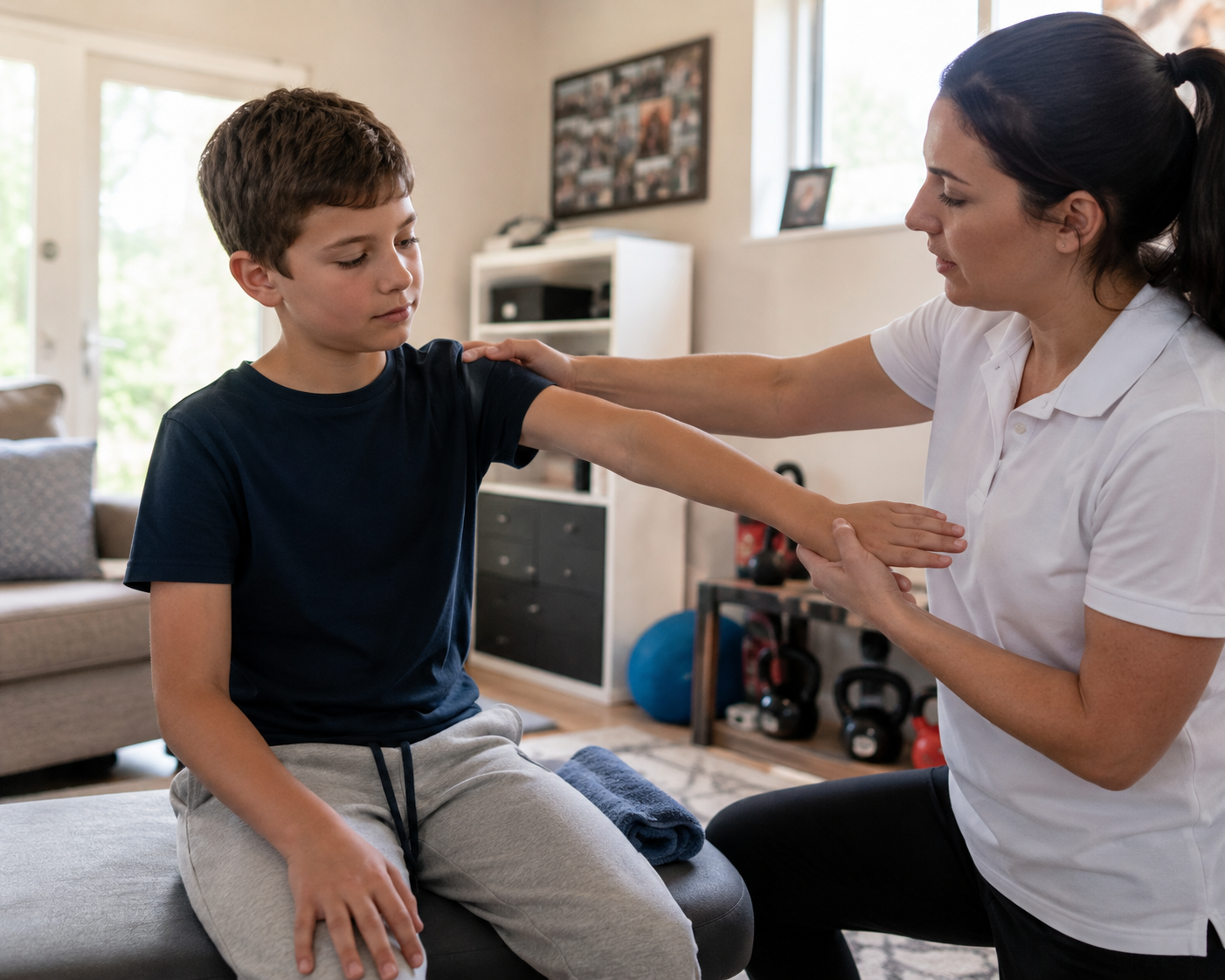
For children with conditions such as Erb’s palsy, physiotherapy is most effective when it supports how they move and participate in everyday life.
We can work with children at home, in nursery or school, and within the community to encourage use of the affected arm or limb, develop strength and movement, support play and functional activities, and reduce the risk of stiffness or compensatory movement patterns.
Where appropriate, we can also liaise with parents, school staff, occupational therapists and the wider medical team so that strategies are consistent across home, education and therapy settings.
For adults, home and community-based physiotherapy allows us to focus on the practical impact of weakness, sensory change or mobility difficulties within the environments where they actually occur.
YOUR FIRST APPOINTMENT
Your physiotherapist will take time to understand the diagnosis, current difficulties and the activities that are most important to you or your child.
The assessment may include strength, range of movement, sensation, posture, balance, walking and functional use of the affected limb. For children, we will also consider age, development, play, school participation and how the condition affects everyday activities.
Together, we will agree meaningful goals and develop a personalised treatment programme, with input from family members and the wider team where appropriate.
NOT SURE WHERE TO START?
If you’d like to find out whether neurological physiotherapy could help you or someone you care for, we’re happy to talk things through.